Problem space
We wanted to provide a benefit to our customers while also delivering value to the business, and showing our cross-functional partners that we can strategically collaborate.
The goal was to continue momentum by showing our partners how we can make strategic impact on the organization's goals.
We identified the Get To Know Me onboarding experience as having outsized impact on overall product performance. This design-intensive initiative required injecting moments of delight throughout the journey, establishing proper information architecture, and building dynamic UI that adapts based on each customer's inputs.
Results and impact
Business performance
Increase in S2C (start-to-complete, the North Star metric for TurboTax) by 3 points* and a key contributor to 15% revenue growth.
* This 3 point S2C increase was the single largest improvement in the entire business that fiscal year.Operational performance
Moving the start date earlier in the season allowed for implementation without delay, while still allotting time for design QA. GTKM was released with no bugs, and a team that was not burnt out due too poor planning and time management
Impact
-
External: By increasing our impact through improved craft and partnership, we highlighted how design can ease the operational burden on other departments and contribute perspective to product strategy.
-
Internal: The team's capacity and confidence to conduct research independently and work with data greatly improved.
Ownership
-
Strategic timing: Moved work forward into tax season to gather both quantitative and qualitative data, ensuring insights informed active work rather than being collected after the fact.
-
Design craft: Revamped the ordering of questions to match the customer's mental model and build trust, moving at speed without over-researching or over-designing. Additionally, questions were surfaced dynamically based on customer input to minimize duplicative questions and repetitive work.
-
Getting buy-in: Synthesized and presented learnings and opportunity areas to cross-functional partners to gain buy-in on the chosen direction.
Context
What we knew
Reviewing the data during the previous tax season showed a higher than normal drop-off during GTKM. This was problematic given the high correlation between SSN input as an input metric, and filing and payment as an output metric.
What we didn't know
Why or what was causing users to drop off during SSN input.
What we wanted to avoid
Waiting until after tax season to learn what caused the issues, as is typically done.
Revamping timelines
Existing timelines
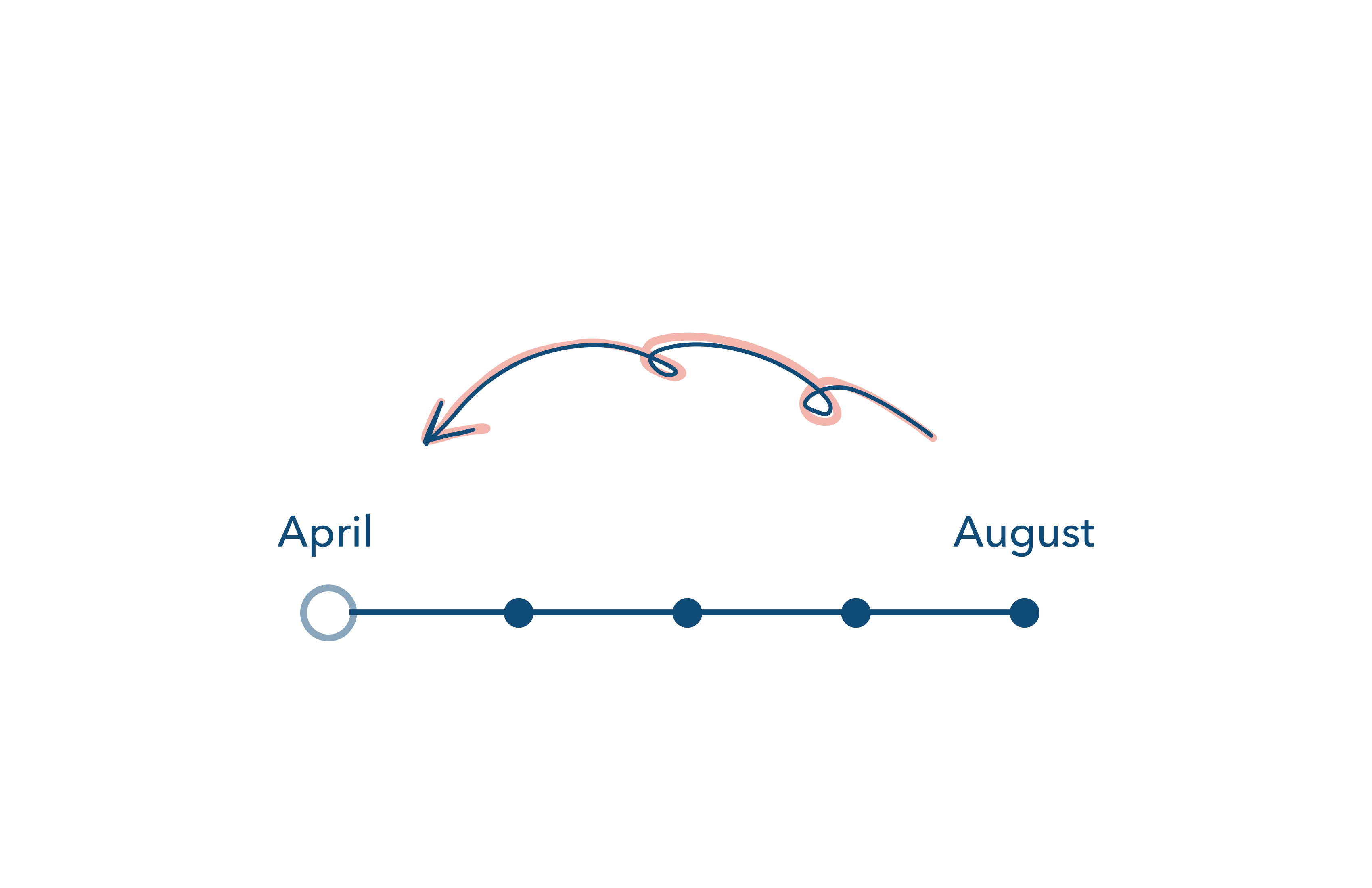
Current process and timelines meant work would start in August, resulting in limited opportunities for experience enhancements and a mad dash to get everything certified on time for tax season. Poor planning begets poor products.
Come with a position
Our goal was to shape the overall product strategy and direction by providing a clear idea of what the product could look like and create a single source of truth artifact that the team could rally around. This approach was grounded in both qualitative and quantitative data, and a deep understanding of the funnel, achieved through strong partnership with cross-functional partners including Product, Engineering, Analytics, and Marketing.
New timelines
Work was done during tax season to gather quantitative and qualitative information, resulting in bringing forward the working timeline.
Redefining research craft
This was my philosophy for the team:
-
Be intentional: Avoid unclear research tasks, and provide clear, unambiguous questions to answer. Do not research commoditized designs.
-
Start early: Move timelines up, and start research during Tax Season, rather than "off season". Insights should be ready to complement initial designs.
-
Full stack: Up-level ICs so they can conduct their own UX research on smaller initiatives and increase velocity. Researchers focus on more difficult questions that require deeper craft.
Team learnings
The issue
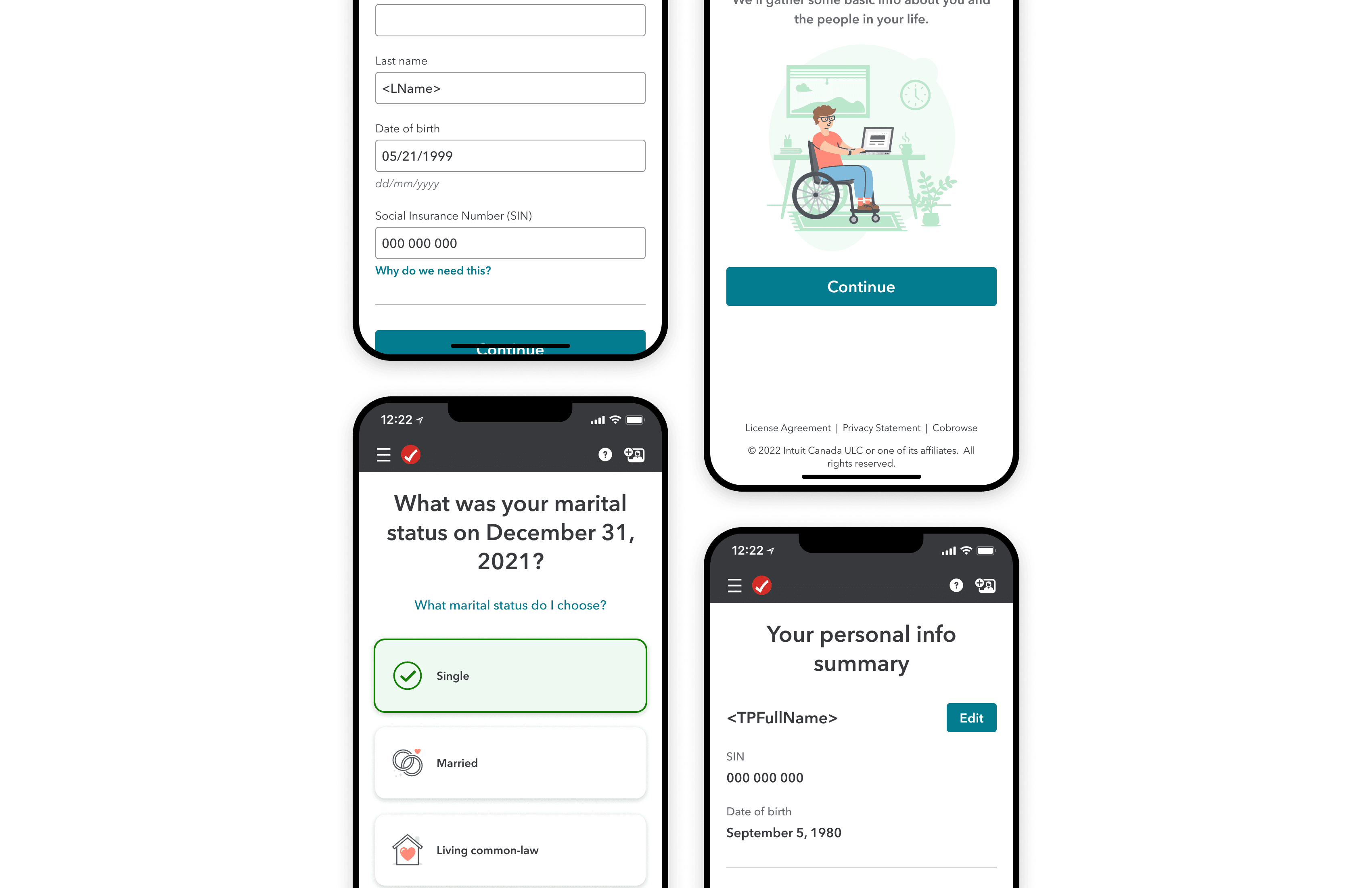
Questions were not ordered to build trust & familiarity, but for data collection. SIN (Canadian SSN) specifically was too early in the flow, and was massive cause for abandonment. We were asking customers for their most sensitive personal information before establishing any trust—asking them to take a leap of faith without earning it first. The core insight was that we needed to forge trust through a more gradual, familiar progression of questions before requesting something as sensitive as their SIN.
The fix
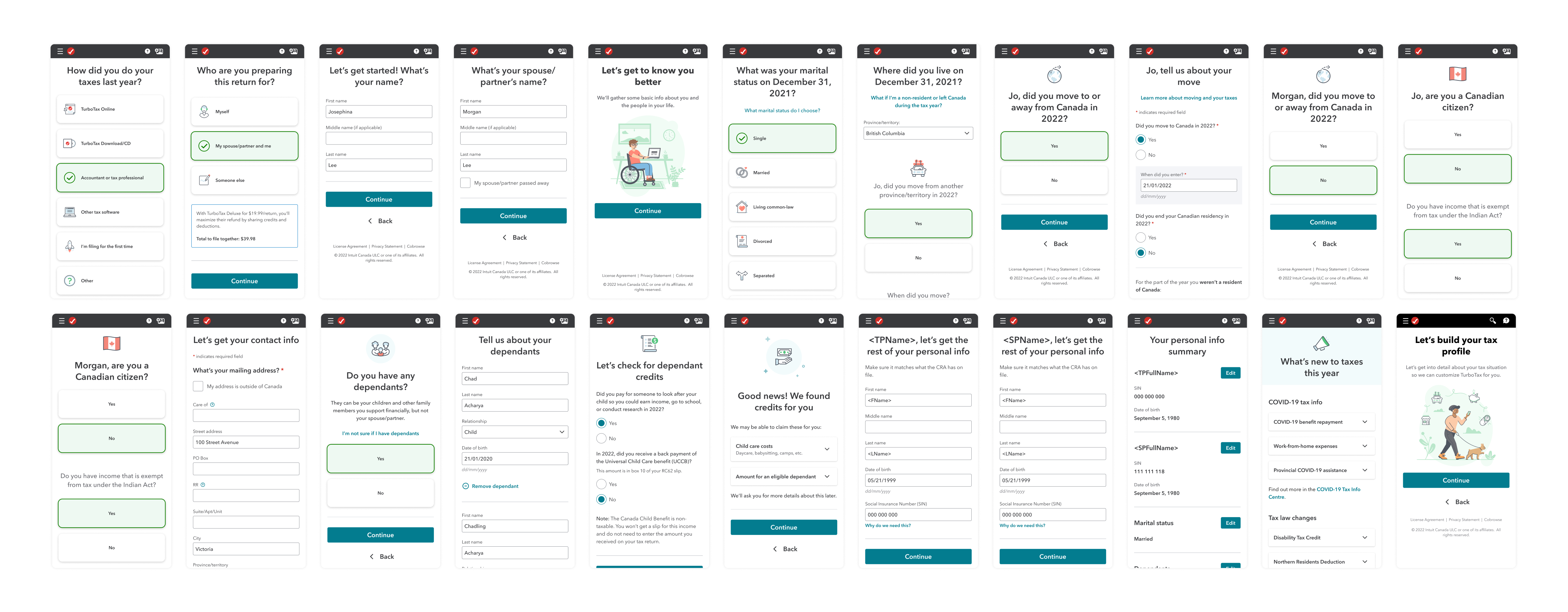
Revamp the ordering of questions to match the customer's mental model to build trust and dynamically show and remove questions based on relevance to limit duplicative work.
Questions were not ordered to build trust & familiarity, but for data collection. SIN (SSN) specifically was too early in the flow, and was massive cause for abandonment.
GTKM experience
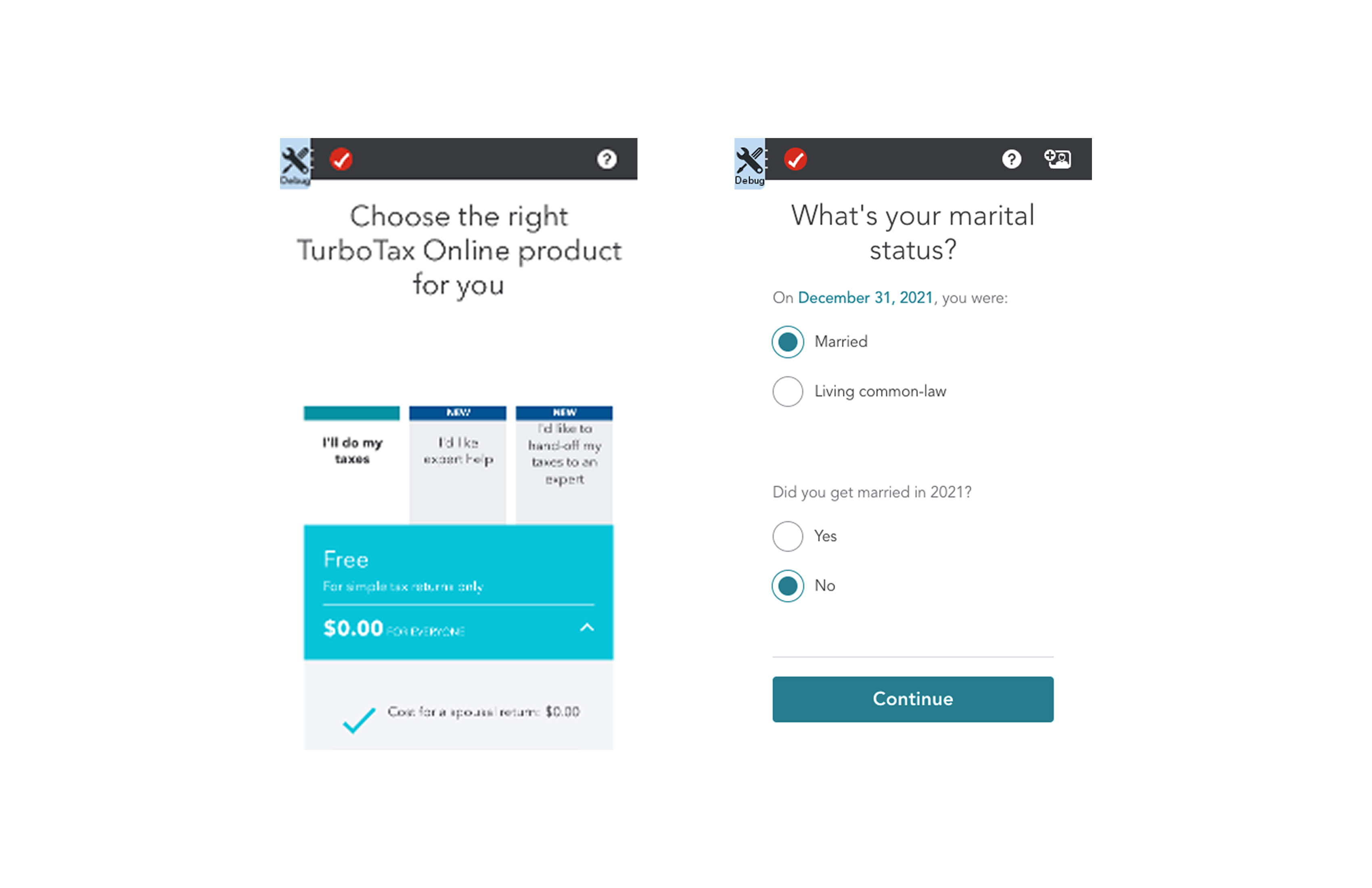
Old experience
Customers were overwhelmed by repetitive questions and tax-heavy language, and this confusion led directly to abandonment.
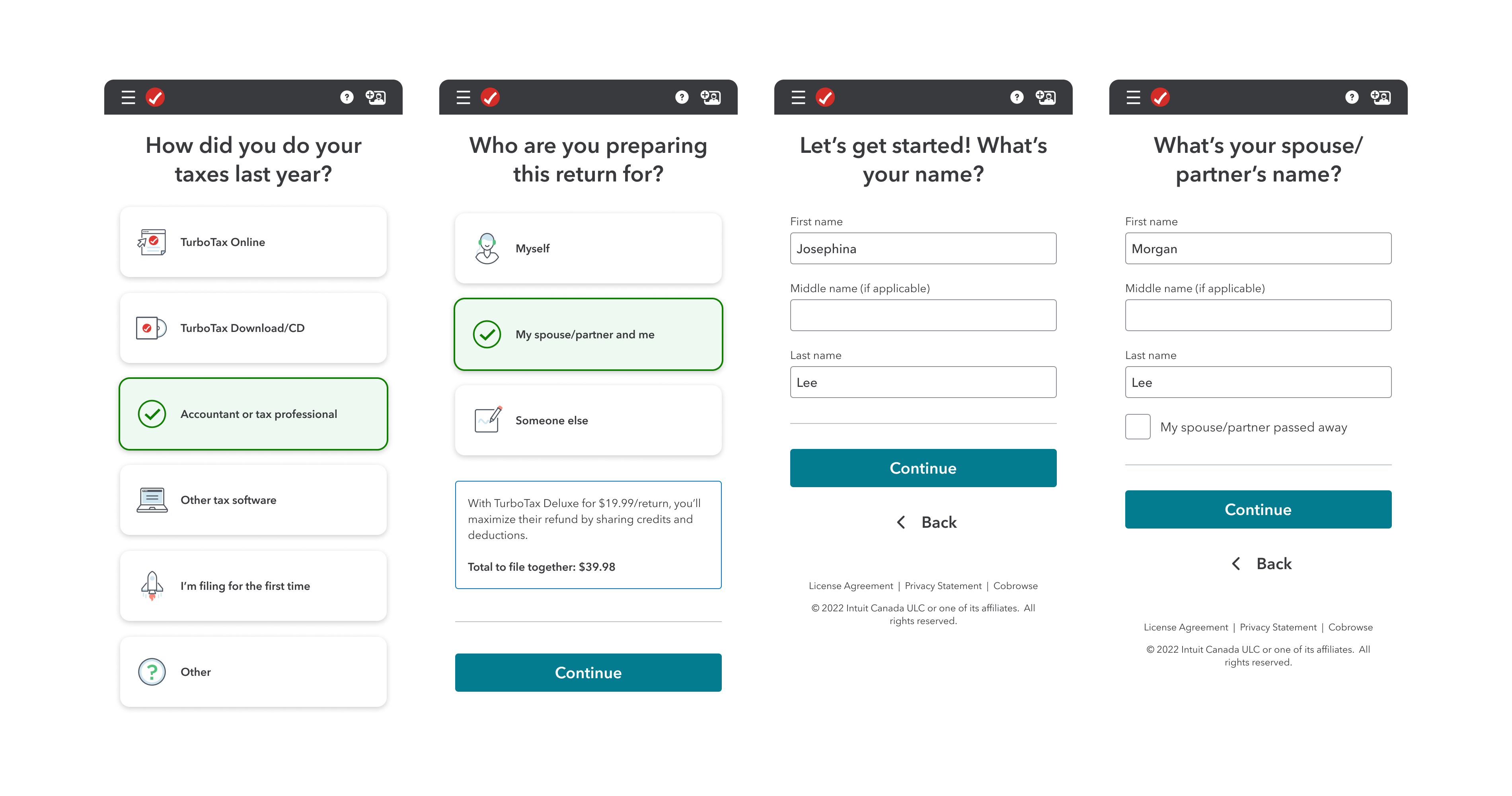
New experience
We contextually nested questions, cutting the total flow by 43%, and introduced more approachable language. The result was a 3 point increase in S2C.
Conclusion
The GTKM project changed how design works at TurboTax. By moving work earlier, establishing research discipline, and bringing data-driven recommendations to the table, we delivered a 3-point S2C increase (the largest single improvement that year) and 15% revenue growth. We proved design could drive business outcomes.
Going forward, partners started bringing us into strategic conversations earlier. We were invited to planning sessions, included in roadmap discussions, and consulted on strategy before requirements were written. We earned a seat at the table and became strategic partners in how the organization builds products.