Problem space
This project took place after my second tax season after:
- The team had gained trust from cross functional partners as a strategic asset
- Transformation had occurred to make sure we had the right skillset(s) in place
Our goal was to make sure that by the time (April) we had to develop products for the next tax year, a full vision was prototyped, shared, and bought into by my cross functional partners. In short, we wanted to be the tip of the spear for the overall strategy.
Results and impact
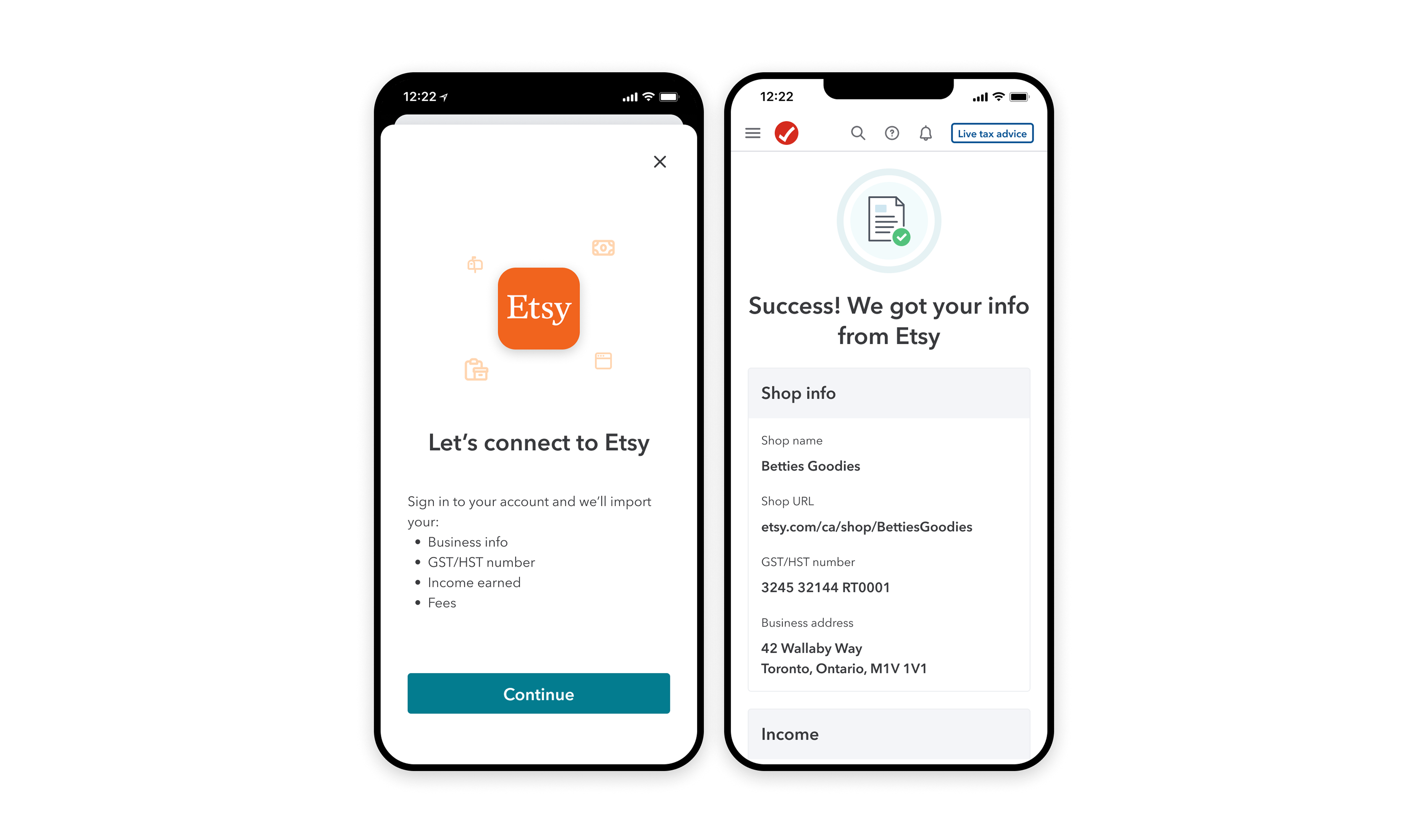
The self-employed vision work delivered significant business impact. Self-employed filings grew 34% YoY in units and 69% YoYs in revenue. The new experience resulted in an 11-point increase in start-to-complete rates, the north star metric for TurboTax. Strategic data-in partnerships with Uber and Etsy attracted approximately 6,000 new customers to TurboTax Self Employed, the highest margin SKU.
This work established a foundation for continued growth, including further integration and expansion of data-in capabilities for future years. The team partnered with marketing to drive awareness of the new self-employed filing capabilities and support customer acquisition efforts.
Evaluating the opportunity
Current state
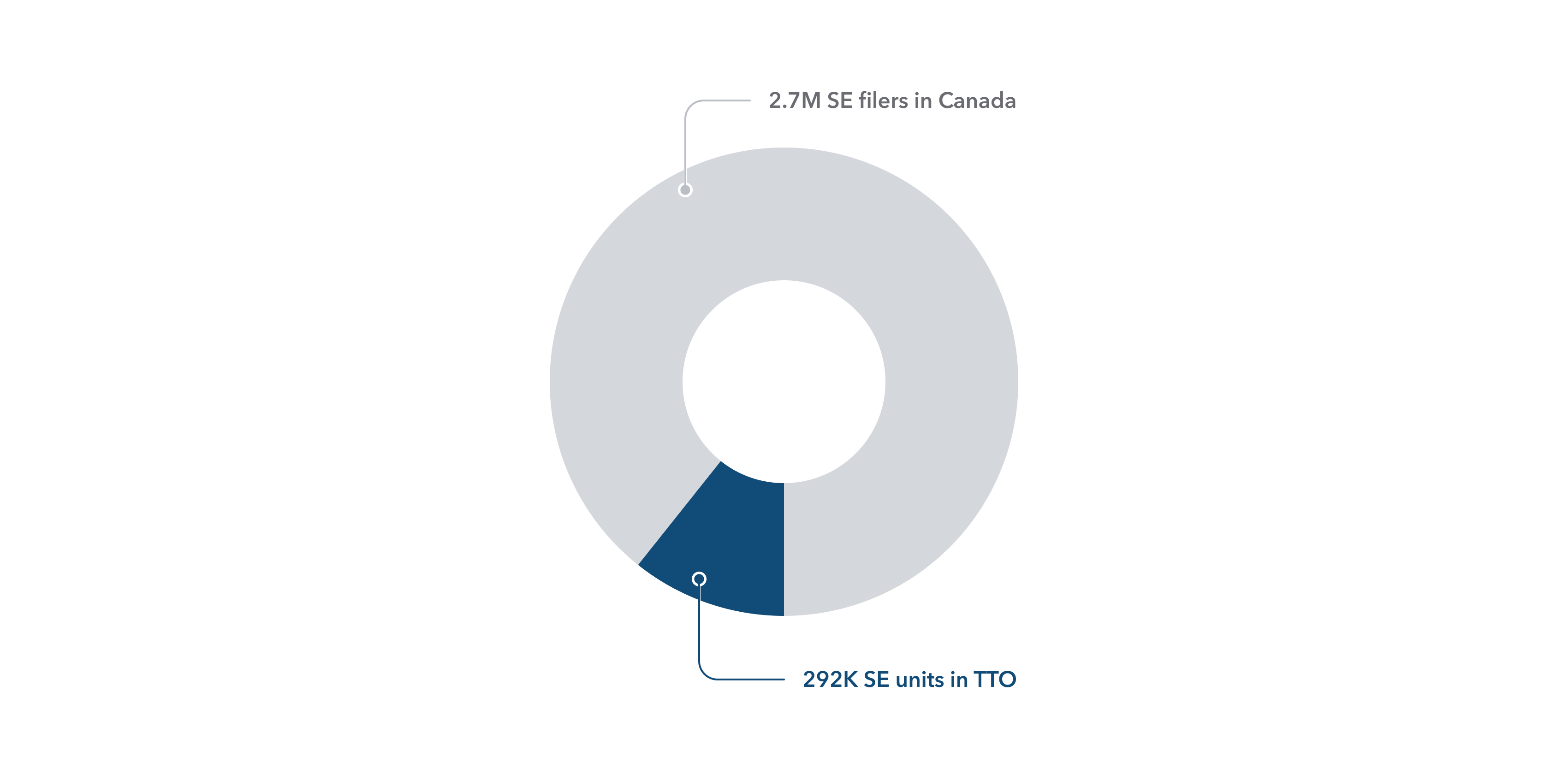
2.7M self-employed filers in Canada, and only ~10% (292k units in FY23) filed with TurboTax Canada.
New self-employed S2C (start to complete - our organizational North Star metric) is at 47%, 10 pts lower than other SKUs.
Future state
Growth in self-employed allows for us to grow with customers and transfer them to our business tax offering:
- Aligns with new to franchise TurboTax Live customer segment organizational goals
- Allows for opportunity to provide year round expertise for increased complexity, which results in transitioning customers from 1 time use to ARR/MRR
Existing performance
Overall new S2C:
- FY23: 57%
New self-employed S2C (do-it-yourself and expert-assisted returns):
- FY23: 47%
- FY22: 49.4%
Self Employed overview
Initial ask
We had strategic buy in. Initially, a re-skin of the existing self-employed SKU was agreed to take advantage of the new platform UI capabilities.
What we knew
Self-employed had to be part of our durable advantage due to free simple filings and CRA (IRS) basic free software. While UI improvements are necessary, they're not enough.
What we wanted to do
Work with our analytics partners, and our ability to complement with qual to identify gaps in self-employed, and drive customer acquisition & retention.

The plan
Together
Identify what the ideal state may look like, and co-design POC with crossfunctional partners. Highlight dependencies early so that we had the chance to work with our partner teams and mitigate any issues.
Team
Rapidly iterate, and explore dependencies to ease burden on our partners. Leverage existing technical capabilities to determine how we can take advantage of what's there.
Myself
Create environment for team to circulate and gain buy-in from Canada leadership team partners. Gain time of crossfunctional partners for POC design. Ensure high quality bar, and we're pushing needle.

My role
-
Prioritize: Ensuring delivery for season was not put in jeopardy by committing to POC. Items that couldn't make impact or unlikely to provide value were deprioritized.
-
Define timelines: Kicked off initiative earlier than ever (Feb) to ensure we (LT) could appropriately plan for such a large initiative.
-
Navigate the org: Circulated early, and often — bringing the Canada LT together to provide input and commitment to the direction of self-employed revamp.
Having a data informed approach
Qualitative research
To properly kick off the initiative and align crossfunctional partners on the problem space, I put in place a detailed research synthesis share out during the planning cycle for the next fiscal year.
What was conducted
12 user interviews, and 5 qualitative interviews with 10 do-it-yourself filers, and 2 expert-assisted filers
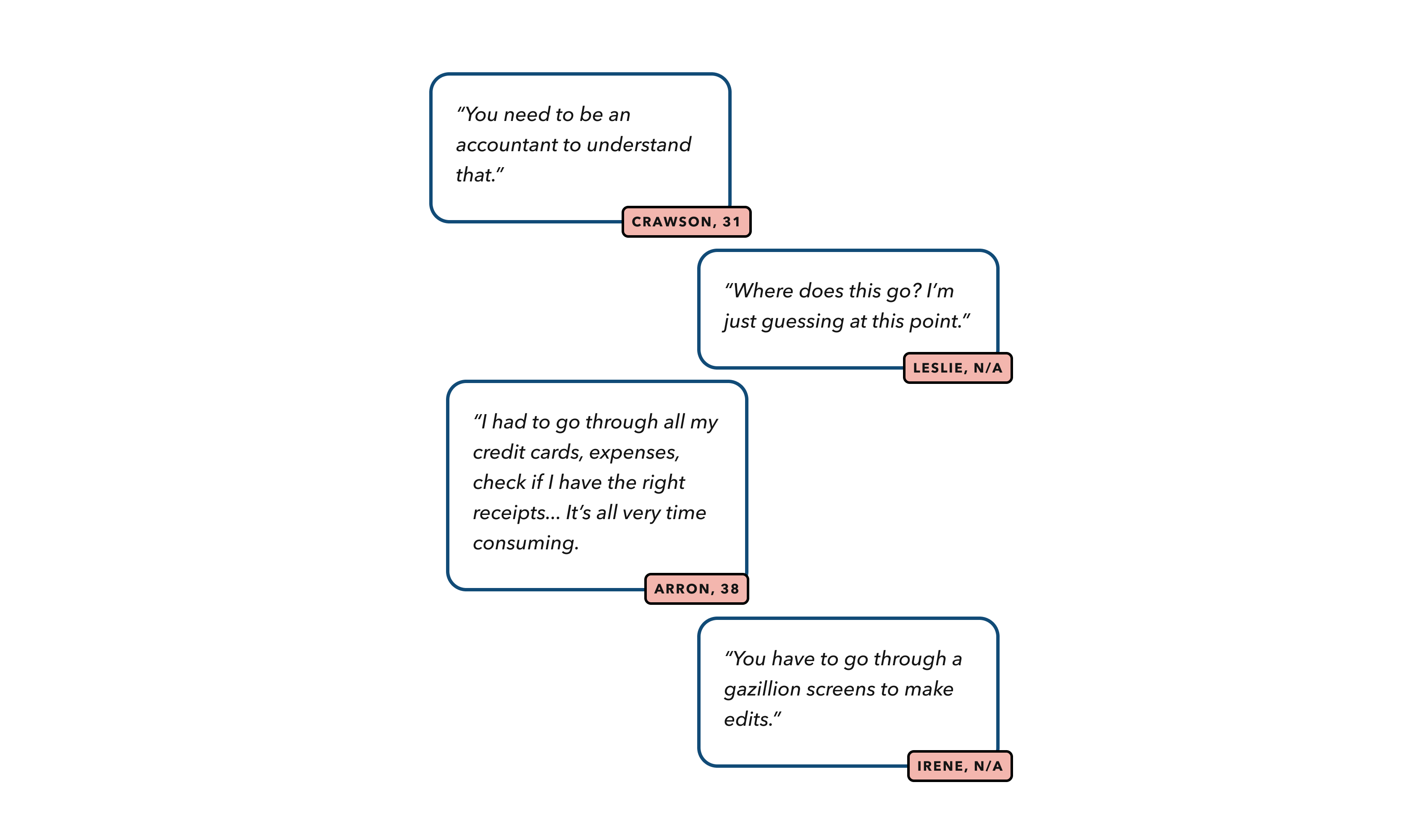
Top problems identified:
- Lack of freedom & control with rigid linear experience
- Tedious doc & receipt management
- Insufficient guidance for new customers
- Hard to understand, complex language
Quantitative research
Partnership
Team now has the confidence to self serve the data and partner with analytics to further insights.
Why lean in
By going through the quant data, the team could inform their designs by:
- Prioritizing feature improvements by drop offs
- Identify any dependencies based on behaviour
- Identify industry code, better understand who are our customers
- Identify gaps in tracking, and assist in beaconing
The new SE strategy
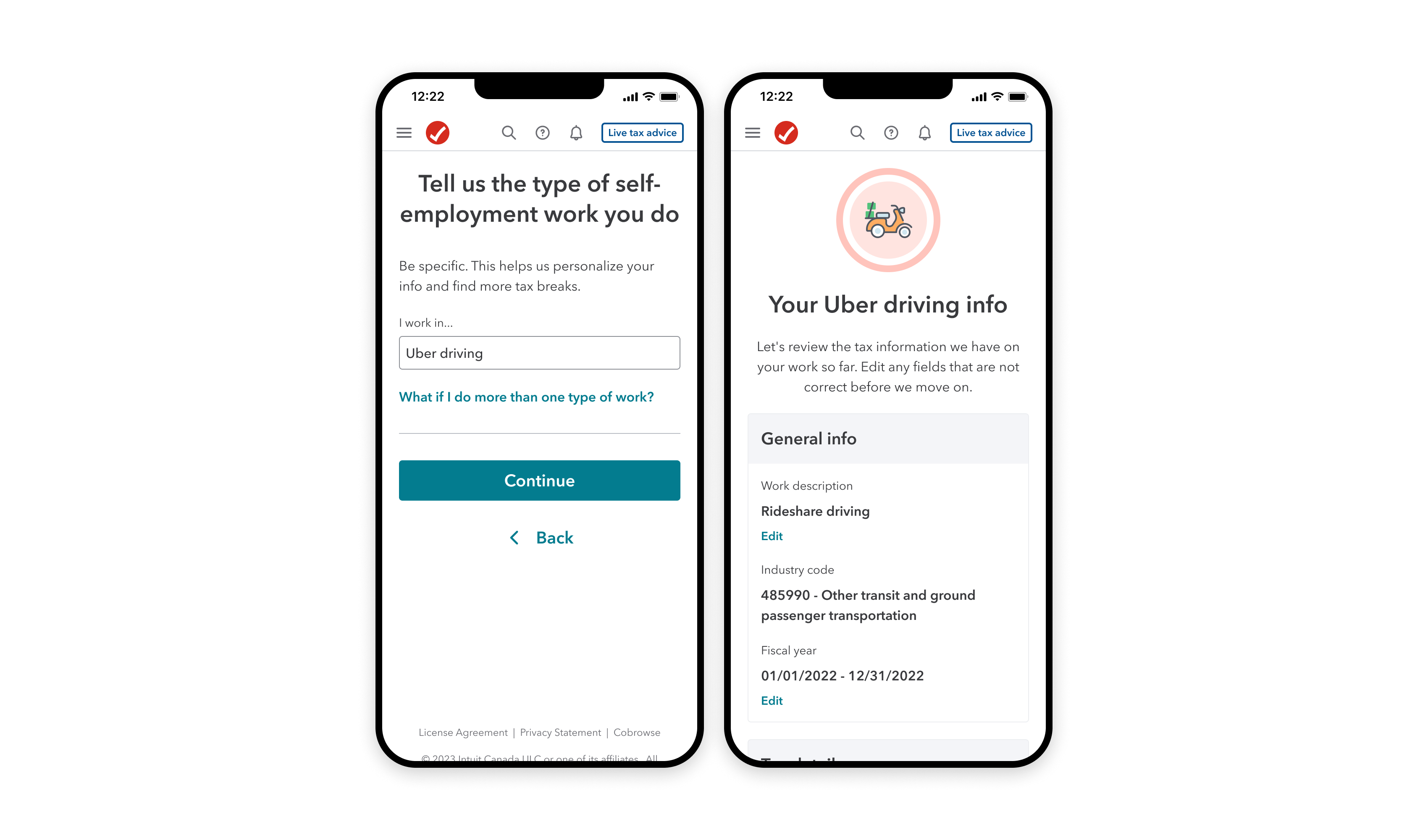
ML Model for industry code
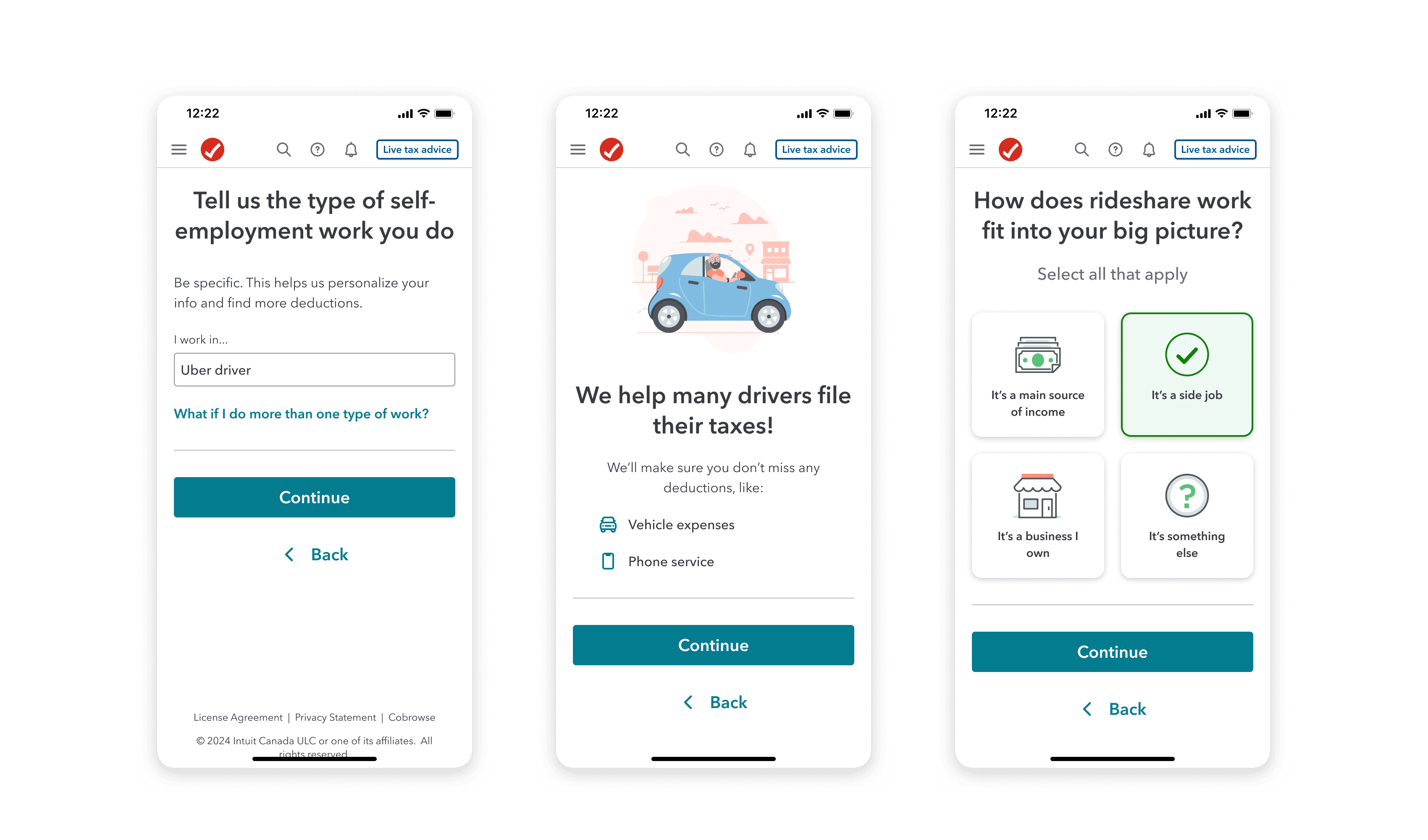
The Industry code entry has been identified as one of the top pages inducing fear, uncertainty, and doubt, with over 1000s to choose from.
To eliminate the burden of having to find an industry code, the new experience will map the correct code using keywords and occupation. We are reinforcing a 'done for you' experience, while still keeping a human in the loop for verification purposes.
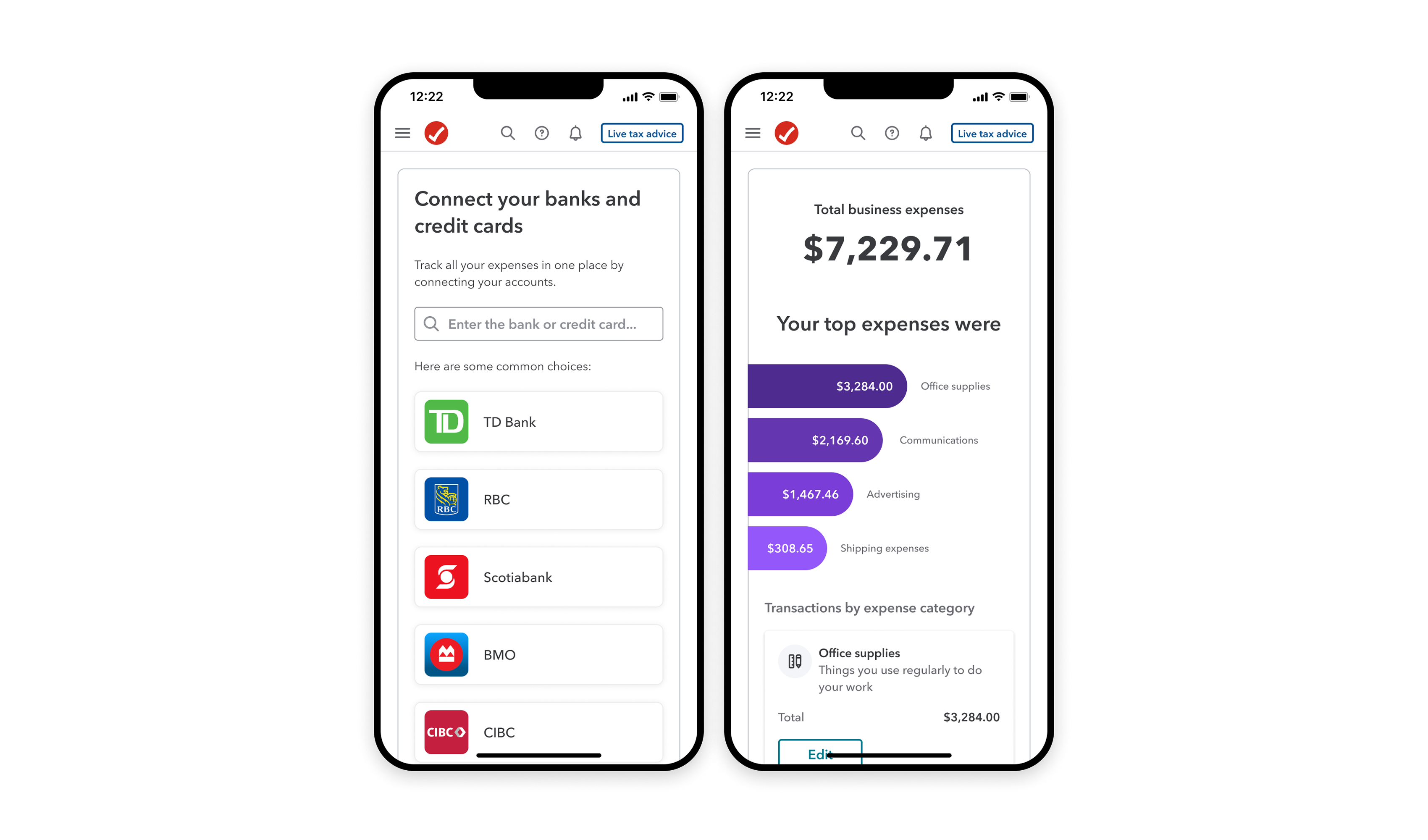
Financial institution connection
Users often struggle with bookkeeping throughout the year and understanding claimable expenses.
With direct integration with banks, TurboTax can sift through transactions, locate eligible expenses and enter them in the return.
Data-in capabilities
Direct partner integration will simplify tax filing by mapping tax info into their return - no more guess work.
This also offers a competitively advantaged product aiding in new customer acquisition